Monday, April 24, 2017

Terms and Concepts You Should Know for the Final Exam

I hope you enjoyed taking the course in Consumer Math at WHAE.

In the penultimate class, we will review key terms that you should know for the final exam.

Here is a summary of the key terms and questions that will be on the exam:

·         Percentage Change Formula – be able to calculate what the change in price was when     
          given an old and a new price
·         Percentage Discount Formula – you get x% off – the new sale price is?
·         Percentage Mark-up Formula – you want to make x% profit over the cost of an item –
          how much should you charge?
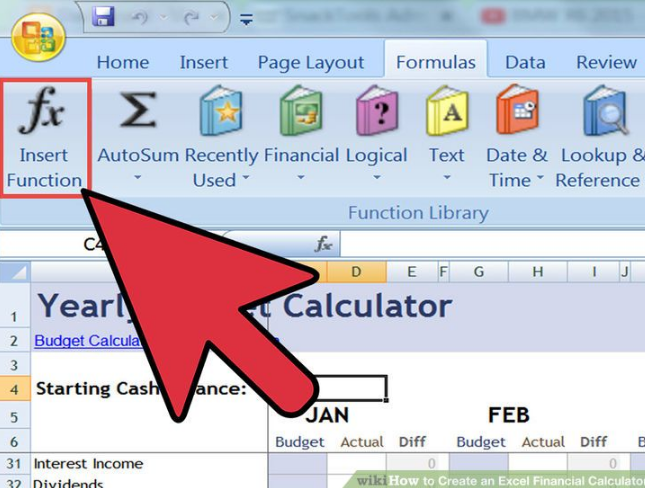
·         Future value formula – how much will the value of a savings or retirement account be worth if it grows at x% per year, over a 10, 20, 30, or 40-year period?  Be able to write out the formula to solve – extra credit for using Excel to find the exact answer (future value)
·         What is depreciation?  By how much per year does the average car depreciate in value? 
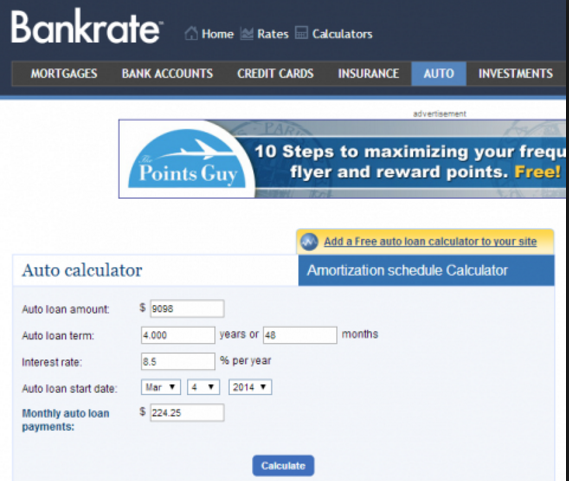
·         Be able to use Bankrate.com to calculate the total interest paid on a car loan or a mortgage
·         What web sites would you go to for used car pricing information?
·         What is net worth? How do you calculate it?   What is an asset?  What is a liability?
Give 3 examples of a current liability.
·         What is a budget? Surplus? Deficit?  Is a budget more related to net worth or net income?  Why?
·         What is meant by the risk vs reward of an investment?  Which investments are risky?  Which investments are least risky?  Which investments give higher rates of return – risky ones or less risky ones? 
·         What is the max percentage you should allocate to housing as far as your budget is concerned?
·         What’s the most you should pay for a house as a multiple of your annual gross income?
·         When would you not consider buying a home?  Why?
·         What is liquidity mean as far as investing is concerned?  Which investments or assets are liquid? Which are illiquid? 
·         What are the advantages of a Roth IRA and a 401K? 
·         What are the biggest expense categories (as a percentage of your gross income)?
·         Why are many younger folks net worth negative while early retirees net worth positive?
·         List 3 good uses of credit (debt).  List 3 bad uses of credit (debt). 
·         What is the most important variable that the credit bureaus use in the calculation of your FICO score?
·         Why should you pay down your debt as fast as possible?
·         What is an emergency fund?  About how much should you set aside for it in terms of number of total avg monthly expenses?
·         What is a W-4 form?  What are exemptions/allowances on a W-4 used for?  What other info is required when filling out a W-4 form?
·         What is a W-2 form?  What key info do you find on it?
·         What’s the difference between APY and APR?
·         What is the FICA tax?  How much do employees typically pay in to FICA as a percentage of their gross income?
·         Be able to convert a decimal to a percentage to a fraction – esp for 1.0, 2.0, 0.5, 0.3333, 0.6666, 0.25, 0.2, 0.125, three-eighths, seven-eighths
·         What is a credit vs a debit (in a checking account registry – transaction history)
·         How much of a percentage gain do you need to get back to break-even after suffering a loss of x%?
·         How to factor in the cost of CT state sales tax into the final purchase price
·         What is the historical rate of inflation in the U.S. and what does that do to the price of an item over a 1-year, 2-year and 3-year period?

·         If you double your money, what percentage increase is that?  Same question for tripling your money.

If you have any questions, please ask.   Good luck!

Monday, March 27, 2017

Budgeting and Personal Cash Flow Tracking

A budget is simply a plan for how to spend your money.  

One of the best ways to plan ahead for expenses is to apply zero-dollar budgeting to the envelope expense allocation system.    


Years ago, smart budget conscious folks used to split up their monthly paycheck (i.e. cash) into 10 or so envelopes, allocating a certain percentage (and dollar amount) to each.  The envelope expense allocation strategy basically forces you to limit or cap the amount that you could spend for each expense category. When you wanted to buy a pair of shoes, for example, you would literally draw money from the clothing envelope and no more.  You would therefore be very conscious of the amount of money that you could spend that month for an expense category. 

If you exceeded your monthly budget for one expense category, which would happen occasionally, you would have to use what was left over from the other envelopes, and no more.  


That's the envelope part.

The zero-dollar budgeting part means that every dollar had to be accounted for.  You had to "spend" or allocate each and every dollar.  In other words, every dollar has a job.  Even the excess amounts - that goes into your Savings envelope.   If you're not generating surpluses across the non-savings envelopes, you won't be able to save anything towards your retirement account, your rainy day fund, or towards the purchase of a big-ticket item like a car or a home.  In this way every dollar that comes in (i.e. your income), is accounted for.

This approach is great because you would force yourself not only to live within your means, but also to save for important things like your retirement, healthcare, etc.

Here is an example of how you would break up your cash flows using the envelope system:


As you can see, every dollar is accounted for, after savings has been factored into the equation.  In the end, what you spend or account for must equal what you take in (i.e your income).

There are many budgeting apps out there that can help you budget your money (i.e. track your cash flows).  Here are some that I recommend:


  • Mint.com (free)
  • Quicken $30
  • neobudget.com $5/th
  • moneywellapp.com $60 one-time fee


I also recommend checking out Kiplingers magazine and David Ramsey's Total Money Makeover, and DavidBach.com for learning how to take control of your money.


To access the Budgeting and Cash Flow Tracking exercise, please click on this link.

To access the Cash Flow Budgeting Powerpoint presentation, please click on this link.

To access the Net Worth vs Net Income Powerpoint presentation, please click on this link.

For homework, please complete the Kiplinger's article question and Cliff's Wonderful Financial Adventure exercise sheet.


Monday, February 27, 2017


Hi students!

Today's class is about how to use Excel's financial functions and Bankrate.com's financial calculators to solve real-world financial challenges.  


There are 6 questions.  You can access the spreadsheet by clicking on this link.

When you're done, save your spreadsheet with your name on it, in this manner:

    JohnSmith_ExcelFin_022717.xls   

Submit your answers by attaching your spreadsheet in an email and send it to:

                                         rwiegs@gmail.com


Monday, January 30, 2017

Today's lesson on how to use percentage change, mark-ups and discount formulas


In today's lesson, we're going to learn how to use percentage formulas to calculate:

a) percentage changes

b) % mark-ups and 

c) % discounts 

                                      all vital to business transactions and dealings.

To access the Excel spreadsheet, please click on this link.


                                                Percentage change formula:


Percentage markup:


Percentage discount:


Sale price = Marked Price x (1- % Discount)


% Discount= (Sale price - Marked Price) / Marked Price


Monday, January 23, 2017

Welcome to WHAE Personal Finance Class

Hi and welcome to West Haven Adult Ed. Consumer Math class with Richard Wiegand!


For a copy of the syllabus and course expectations, please click on this link.

The class will meet Mondays from 6:30 - 8:00 PM from September 11th through December 4th - except for holidays, snow-days or cancellations.  Please check the West Haven Adult Ed. web site for cancellations or postponements.


Today's lesson is about how to maintain a checking account registry using Excel. We will also discuss the cost of CT Sales tax on the purchase of goods and services in the state of CT.  To access the Len Lombardo Checking Account Registry, please click on this link.   To access the CT Sales Tax exercise, please click on this link.


===============================================


The text for the course is entitled Personal Finance by Margaret Magnarelli.  To access the pdf, please click on this link.


Unlock Your Potential

Success is goals, and all else is commentary. All successful people are goal oriented.  They know what they want and they are focused single-mindedly on achieving it, every single day.  

Your ability to set goals is the master skill of success...Without goals, you simply drift and flow on the currents of life.  With goals, you fly like an arrow, straight and true to your target.  

Clear goals increase your confidence, develop your competence, and boost your levels of motivation.  As Tom Hopkins once said, "Goals are the fuel in the furnace of success."

Join the Top 3 Percent

Mark McCormack in his book What They Don't Teach you at Harvard Business School tells of a Harvard study conducted between 1979 and 1989.  In 1979, the graduates of the MBA program at Harvard were asked, "Have you set clear, written goals for your future and made plans to accomplish them?"  It turned out that only 3% of the graduates had written goals and plans.  13% had goals, but they were not in writing.  Fully 84% had no specific goals at all, aside from getting out of school and enjoying the summer.

Ten years later, in 1989, the researchers interviewed the members of that class again.  They found that the 13% who had goals that were not in writing were earning, on average, twice as much as the 84% of students who had no goals at all.  But most surprisingly, they found that the 3% of graduates who had clear, written goals when they left Harvard were earning, on average, 10 times as much as the other 97% of graduates all together.  The only difference between the groups was the clarity of the goals they had for themselves when they graduated.

What an eye opener!  


This excerpt was taken from Brian Tracy's book entitled, Goals! How to Get Everything You Want Faster than You Thought Possible.


Monday, September 26, 2016

Carmax.com, Trulia.com, Rent.com and Bankrate.com computer lab exercise


In this computer lab, we will consider the cost of financing a used car, and the cost of renting an apartment or buying a home in 4 locations across the country.

Here is the link for the Carmax.com exercise.


Here is the link for the Buying a Home Mortgage term comparison exercise.


Monday, April 4, 2016

Today's Personal Finance class has been canceled due to inclement weather


I just got word that West Haven HS is closed due to inclement weather.  There is therefore no personal finance class tonight.

Classes will resume next Monday and Wednesday April 11th and 13th (same time and locations).

Thank you for understanding.

R. Wiegand

Wednesday, December 16, 2015

Course Summary Recap

Thank you for taking West Have Adult Ed Personal Finance course with me.

The last session's class on Insurance and Taxes has a Powerpoint that can be accessed by clicking on this link.

In addition, you may find a course summary Powerpoint useful as well; here is a link to access it.


It's been a pleasure.

Happy holidays.

R.Wiegand

Wednesday, December 9, 2015

Take-home Final due December 16, 2015


Here is a link to access a copy of the take-home final.

It is due in class next week, December 16, 2015, or via email by sending it to rwiegs@gmail.com.   If you choose the latter approach for submission, you must notify me first.


Best of luck and Happy Holidays!

Wednesday, December 2, 2015

Credit Management

Today's class is about credit management.  


We'll explore the following key terms and concepts:

Credit
•Creditor
•Closed-end credit, installment debt
•Open-end credit, revolving credit
•Line of Credit
•Available credit
•FICO score
•Credit utilization ratio
•Grace period
•Finance charge
•APR 
Debt/Income ratio

We'll review a sample credit card statement and talk about strategies that can save you thousands of dollars in interest payments.

We will also discuss how to keep your credit cards secure.

We will review basic concepts of contract law and what can happen in the case of bankruptcy.

Finally, we will talk about where to go to get debt counseling and whether debt consolidation programs are appropriate.

To access a Powerpoint of this lesson, please click on the following link.

Monday, November 16, 2015

West Haven Basic Math Computer Lab Exercise

Today we will use Excel to do some data analysis from two tables.

The first table is related to nutritional information about meats.

The second exercise has to do with interpreting budgeting expenses for a hypothetical individual named Thomas Woods.

To access the Excel spreadsheet, please click on this link.

When you are done with both parts of the exercise, please save your spreadsheet as Firstname_Lastname.xls and send it as an attachment to rwiegs@gmail.com

Sunday, September 6, 2015

SMART Goals are well, smart!

In chapter 1 of the Personal Finance textbook we find the definition of a SMART goal.  The best goals are S-M-A-R-T in the sense that 


The more specific, measurable, action-oriented, realistic and time-sensitive your goals are, the more likely they will be realized during your lifetime.  For further explanation, please review the author's discussion about SMART goal setting in her text by clicking on this link.

Here is a flow chart for the process of setting a SMART goal:


For an example of how to apply a SMART plan to a real life example, please click on this link to access a spreadsheet that helps you calculate the cost of purchasing a big ticket item (such as a car).  

Saturday, September 5, 2015

Net Worth and Net Income - 2 related but different guages of financial health


February 18, 2015

Hi Students,

Today our objective is to learn some of the differences between Net Worth and Net Income.  


One is more of a flow concept that should be monitored at least monthly, while the other is more of a big picture, frozen snapshot concept that should be reviewed at least once per year.   


BOTH are excellent ways to gauge your personal financial health.

To access today's presentation, please click on this link.

Wednesday, March 25, 2015

Personal Investing Reward to Risk Exercise


We continue our review of personal investing concepts.  Today, we will explore the reward-risk trade-off for various securities that can comprise an investment portfolio.


The trick is to find an optimal balance between risky investments and conservative investments to reach our long-term retirement goals.  You shouldn't have to stick out your neck too far to get 6-9% annual returns, as we shall see.  


To access the Excel spreadsheet with the scatter plot please click on this link.

To access the Word document with the scatter plot questions (12 in all) please click on this link. 

You can also access the Powerpoint presentation on investing by clicking on this link.

Monday, March 9, 2015

Mid-term Questions Study Guide

The WHAE Personal Finance Mid-term is comprised of 2 parts: 

Part 1 - 10 short-answer questions worth 7 points each

Part 2 - 1 Take-home essay question analyzing two hypothetical individuals' net income cash flows.   Parts 2A and 2B are worth 15 points each.  So the take-home part is worth 30 points out of 100.


Part 1 Short-answer questions deal with the following terms and topics (you should know the definitions of them all):


  • the difference between wants and needs
  • what is a budget?
  • what are SMART goals
  • what is the difference between  a short-term goal  and a long-term goal?
  • what is the difference between net worth and net income?
  • what is earned income?
  •  what is inflation?
  • what has been the average rate of inflation in America since 1926?
  • be able to provide examples of good vs bad uses of credit (i.e. debt)
  • what is the difference between fixed vs variable expenses?
  • What is an emergency fund or rainy day fund


Tuesday, February 24, 2015

Understanding your pay-stub, W-4 and W-2 forms

In this lesson, our goal is to review W-4 and W-2 forms as well as the components of a typical pay-stub from an employer.


To access an instructional video, please click on this link.


Wednesday, November 12, 2014

Retirement Savings Planning & Investment Strategies

Saving for retirement requires the discipline to set aside at least 10% of your gross income on a monthly basis.  If this sounds challenging, now try to invest your money wisely.

How do you invest your money wisely??? 


This is not an easy question to answer.  If you talk to 50 investment advisors, they will offer different strategies - from the ultra-conservative to the ultra-aggressive.  Most fall somewhere in between.  But even the middle of the road advice I have found to be inaccurate, as far as maximizing reward to risk is concerned.  

The optimal investment strategy should try to maximize average annual investment returns while assuming the least amount of risk possible.  Period.  Amen.

In this Powerpoint presentation, I offer a solution for the average investor who doesn't want to have to bother with trading or tweaking the portfolio week in and out.  Equally important, I show you long-term investment results of the major investment asset classes: stocks, bonds, real estate and commodities.

I hope you apply these key concepts which will help you save for your retirement and meet your financial goals.  


Wednesday, October 22, 2014

What is Inflation? plus Tracking Cash Flows on a Monthly Basis

You've probably once heard your parents or grandparents say something to this effect: "When I was a kid, a gallon of gasoline costed us only 25 cents!  Look at prices now!"

And it's not just the price of gasoline, it's also food, movie tickets, concert tickets, home prices, land, etc.


Fact is, most countries in the world experience this price deterioration of their currency - otherwise called inflation.  How much the purchasing power of a currency deteriorates per year is the annual inflation rate.

Do you know what the average annual rate of inflation in America has been since 1926?


Why do we have inflation?  What steps can you take to combat inflation and thereby preserve your wealth?
 ______________________________________________________________________

The next topic we will cover today is how to track personal income and expenses in order to ensure that we end up with positive cash flow.  

Let's have a look at a sample spreadsheet:


Let's enter in a hypothetical person's income and expenses (we'll have to estimate what they may be for the first 3 months of the year).  Try to be as realistic as possible.  Once we do this, we can then calculate estimated total monthly income and expenses, subtract expenses from income to get monthly net income.  Did we end up positive?  If so, we're generating a budget surplus; if not, we're in budget deficit.

We can also calculate what % of our total income we're spending on specific expense categories. This is important if we want to put constraints (i.e. to budget) our % allocations to each category.  Please refer to the Kiplinger's article that I distributed in class last week. 

Some key budget % allocation pointers to keep in mind:


  •  No more than 25% of your total income should be allocated to housing (rent/mortgage)
  • You should try to get rid of as much debt as you can as soon as possible (mortgage, student loans, auto loan, credit card debt)
  • You should be saving at least 10% of your total income towards a retirement account like an IRA or a 401K plan. This is known as PYI - pay yourself first.
  • Live frugally, not lavishly. There is really no need to impress others with your wealth.
  • Track your spending habits closely from month to month.  There are many instructional books and videos that you can refer to on this subject. To do this, you should use a spreadsheet, a program like Mint.com, or even a basic envelope allocation system. 

 The percentage expense allocations should appear in the second column from the left on the cash flow spreadsheet provided above.

Also, remember to prioritize these expenses with a "W" for wants or "N" for needs in the third column from the left of the spreadsheet, and in the first column from the left put an "F" for fixed expenses, a "V" for variable expenses, or a "P" for period expenses.

You should submit this spreadsheet exercise by next week, October 29th.  Extra credit will be given if you can include an expense pie chart on the third tab of the spreadsheet.

Wednesday, October 8, 2014

Net Worth vs Net Income Powerpoint presentation

October 8, 2014

Hi Students,

Today our objective is to learn some of the differences between Net Worth and Net Income.  


One is more of a flow concept that should be monitored at least monthly, while the other is more of a big picture, frozen snapshot concept that should be reviewed at least once per year.   


BOTH are excellent ways to gauge your personal financial health.

To access today's presentation, please click on this link.